Borosilicate Glass, Four Parts, Wide Neck
The bottles are borosilicate — the glass type that handles temperature changes better than ordinary glassware — and free of BPA, BPS, and phthalates by virtue of being glass at all. The wide neck means you can reach the bottom with a brush and fill without a funnel, and the whole bottle comes apart into four pieces. Fewer parts is not a minor detail when you’re washing bottles six times a day.
A Flow Range Built Around Newborns
Most brands start at “slow.” Gulicola starts a step below that with an extra-slow (SS) nipple intended for newborns and preemies, then moves to slow (S) around one month and medium (M) around three. The nipple is wide-based and soft, shaped to encourage a broad latch rather than a narrow one — the design goal being a baby who can move between breast and bottle without relearning how to feed.
Independent Testing Found No Lead
An independent consumer-safety advocate tested a Gulicola glass bottle by XRF and reported lead as non-detect across the glass body, the etched logo and measurement markings, the plastic cap and collar, and the silicone nipple. The measurement markings are etched into the glass rather than painted, which removes the most common source of lead in glass drinkware. Details and the necessary caveats are in the article below.
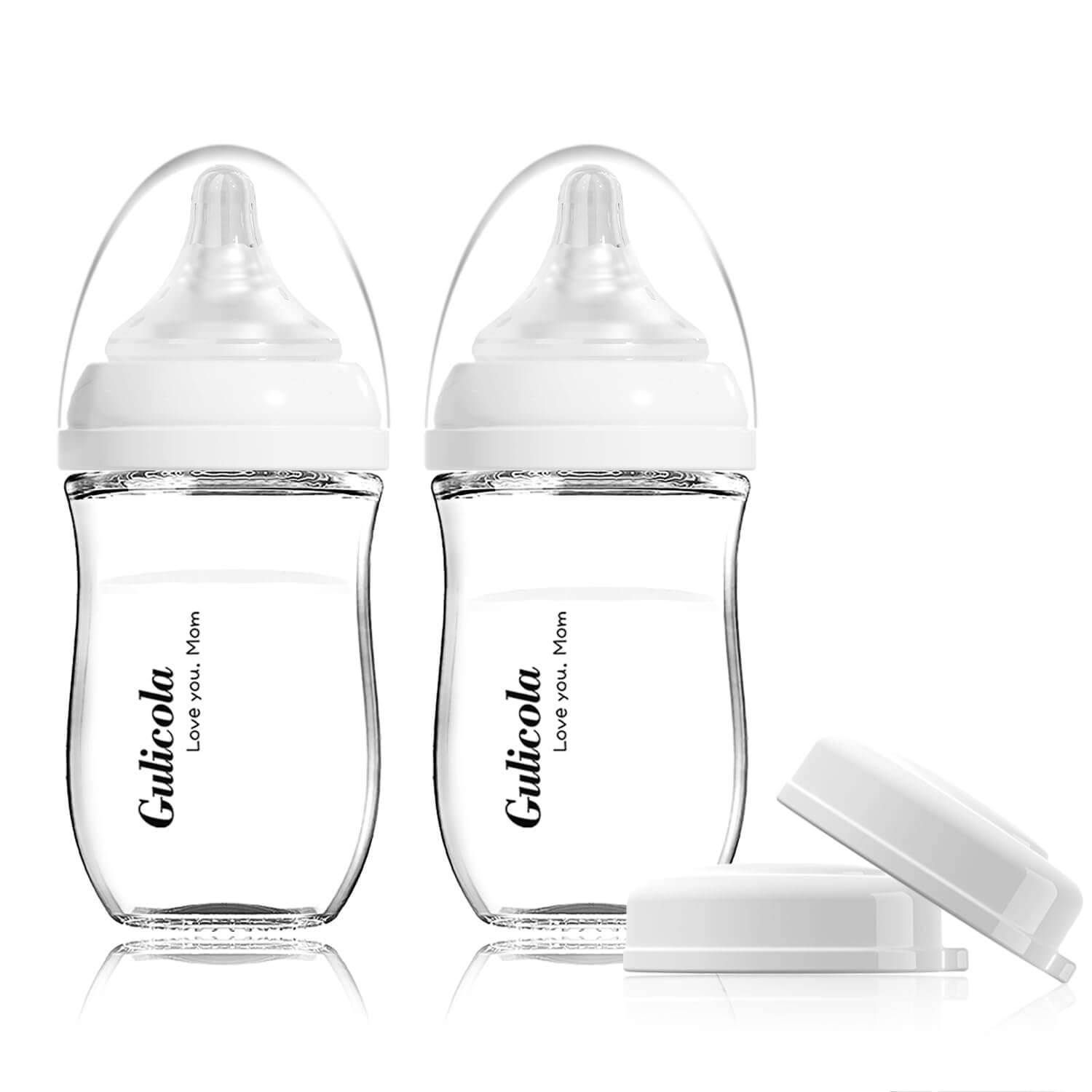
Gulicola Natural Glass Baby Bottle for Breastfeeding Babies, Newborn Anti-Colic Bottle Set with Slow Flow Nipple, 0-3 Months, 5 oz, 2 Pack – White
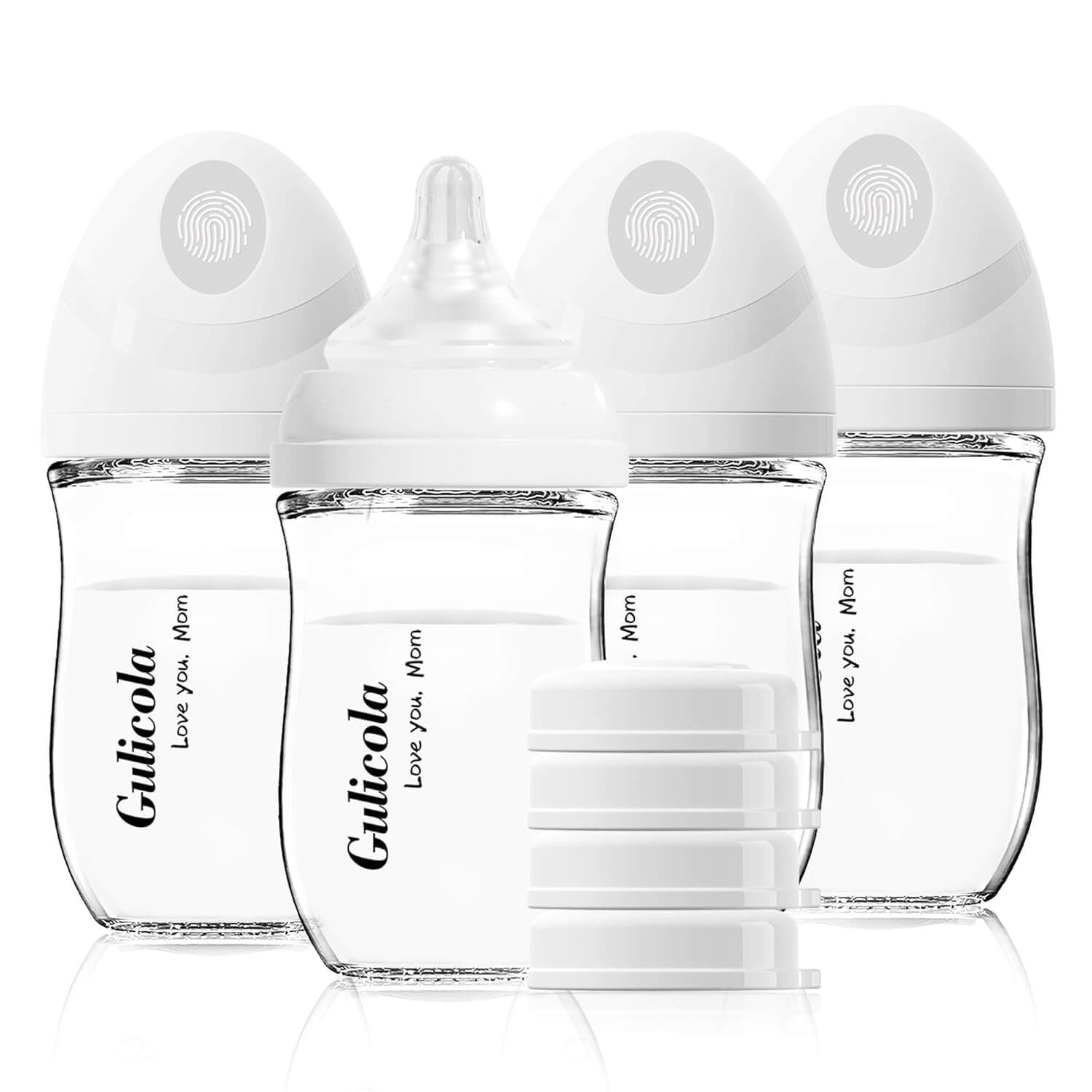
Gulicola Natural Glass Baby Bottle 4 Pack, Newborn Breastfeeding Bottles Set, Extra Slow Flow Nipples (SS), Anti Colic, 0 Months+, 5 oz – White
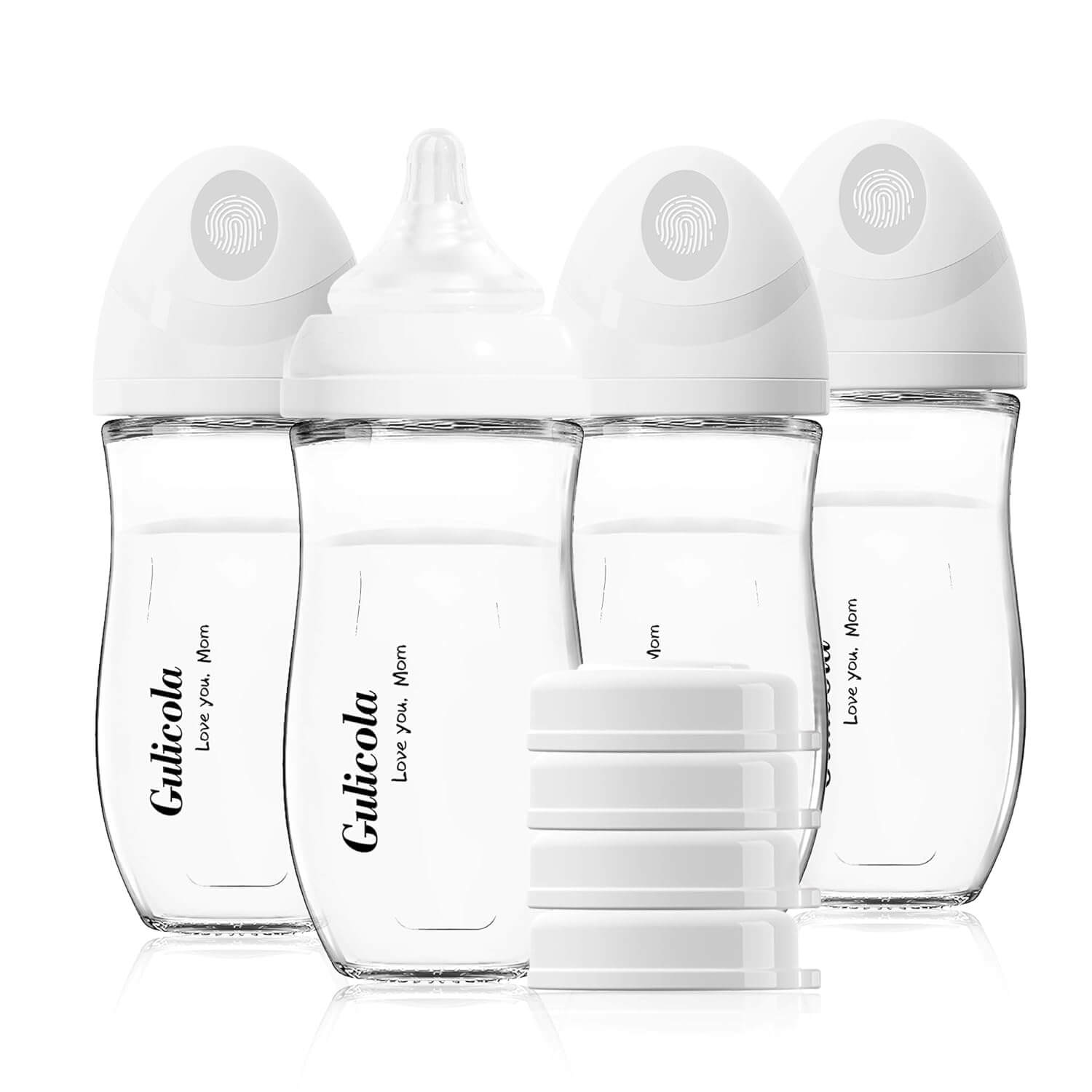
Gulicola Natural Glass Baby Bottle 8 oz for Breastfed Babies, Anti-Colic Baby Bottle Set with Medium Flow Nipple, 3 Months +, 4 Pack – White
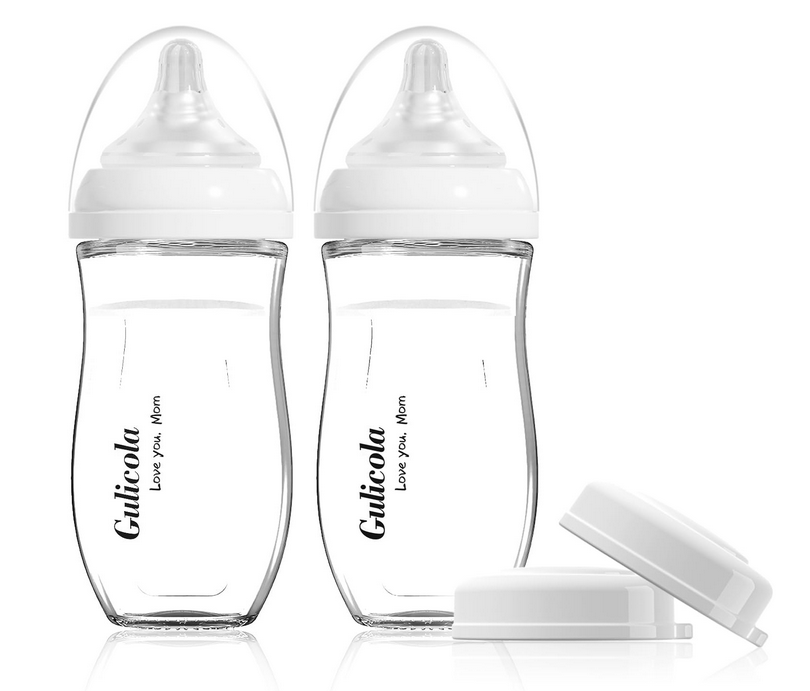
Gulicola Natural Glass Baby Bottle for Breastfed Babies, Anti-Colic Baby Bottle Set with Medium Flow Nipple, 3 Months +, 8 oz, 2 Pack – White
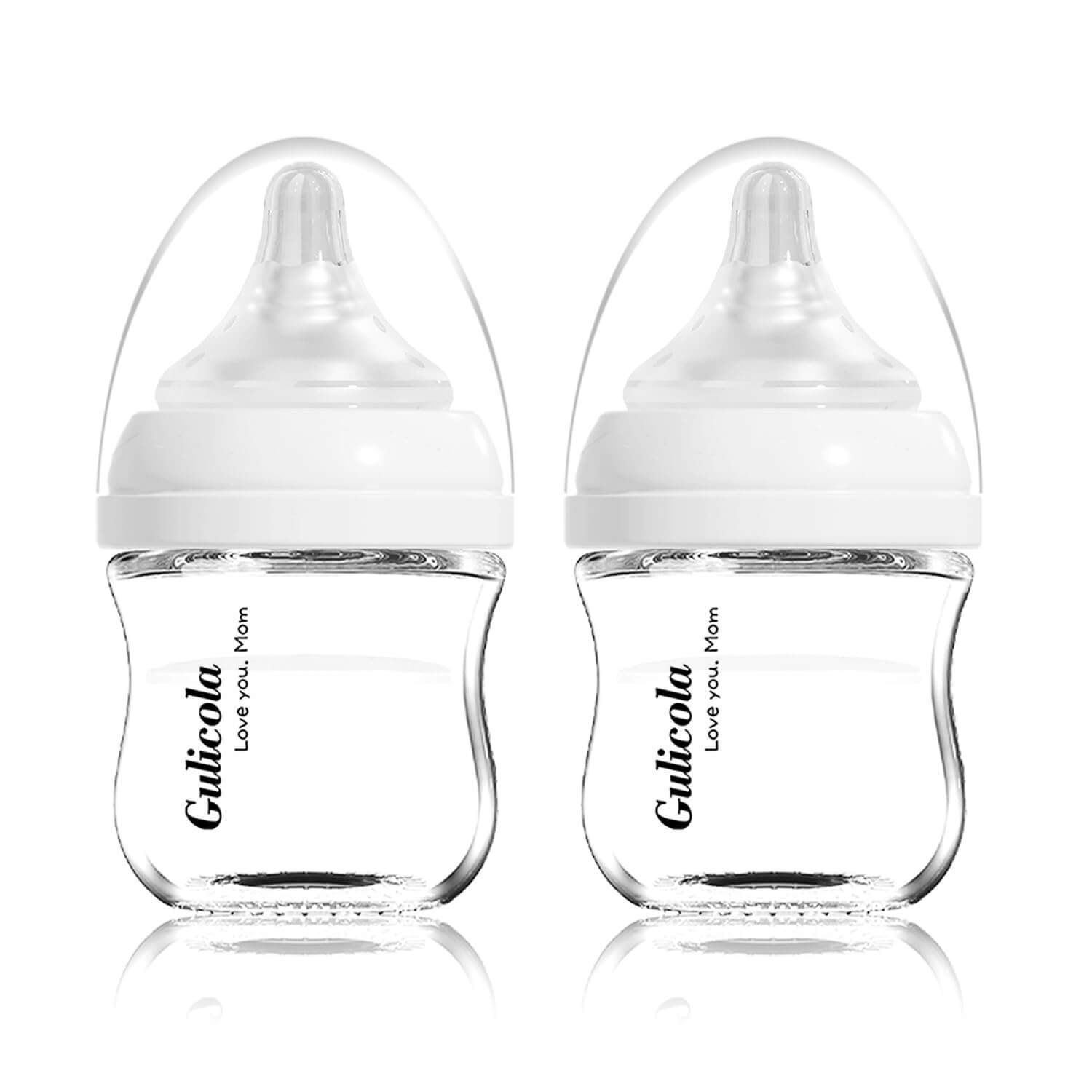
Gulicola Small Glass Baby Bottle for Newborn Breastfeeding Babies, Preemie & Extra Slow Flow Nipples (SS), Anti-Colic, Breast-Like, 0 Months+, 3 oz, 2 Pack – White
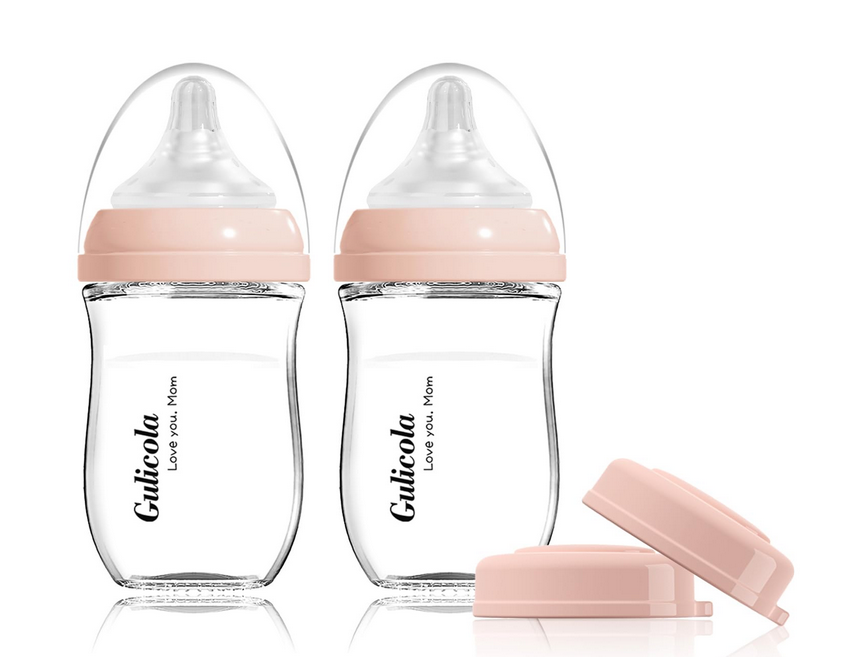
Gulicola Natural Glass Baby Bottle for Breastfeeding Babies, Newborn Anti-Colic Bottle Set with Slow Flow Nipple, 0-3 Months, 5 oz, 2 Pack – Pink
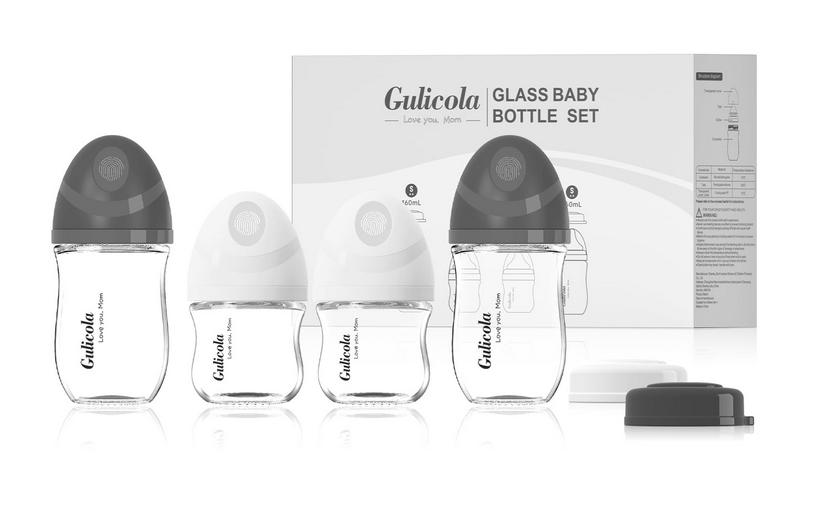
Gulicola Natural Glass Baby Bottles Set 4 Pack, Newborn Boy Breastfeeding Bottles with Slow Flow Nipples, 0 Months+, 3 oz & 5 oz – Black/White
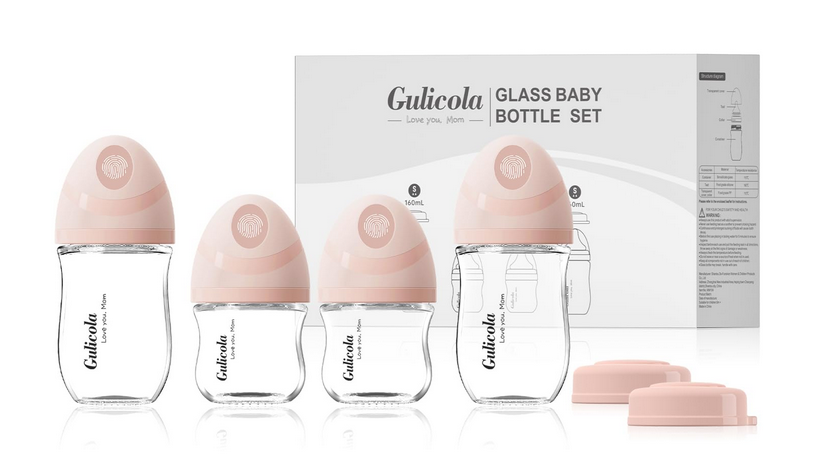
Gulicola Natural Glass Baby Bottles Set 4 Pack, Newborn Girl Breastfeeding Bottles with Slow Flow Nipples, 0 Months+, 3 oz & 5 oz – Pink
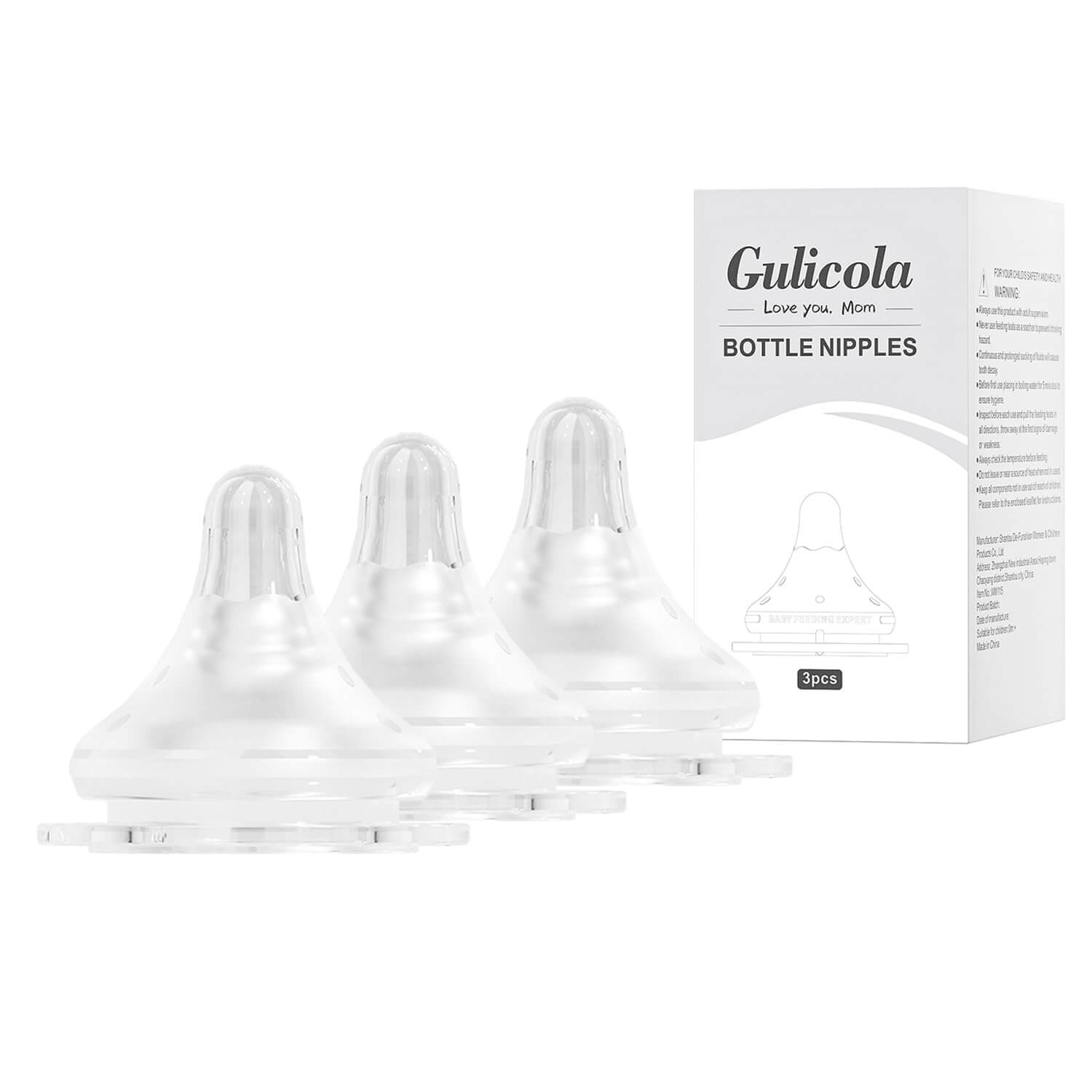
Gulicola Natural Flow Baby Bottle Silicone Nipple Level 1, Slow Flow (S), 1+ Months, 3 Counts (Pack of 1)
Gulicola Natural Flow Baby Bottle Silicone Nipple Level 2, Medium Flow (M), 3+ Months, 3 Counts (Pack of 1)
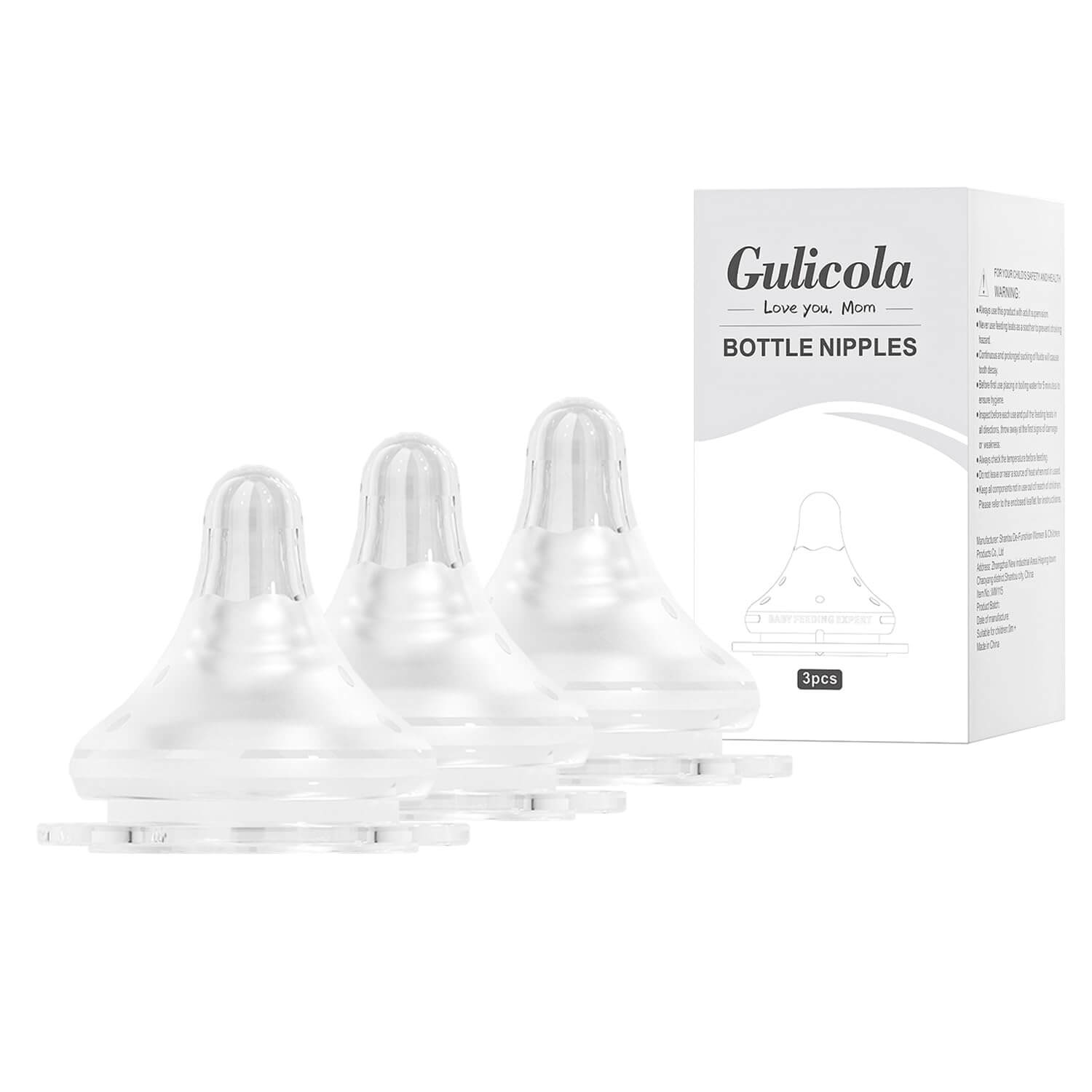
Gulicola Natural Flow Baby Bottle Silicone Nipple Level 0, Extra Slow Flow (SS), 0+ Months, 3 Counts (Pack of 1)
Gulicola Natural Flow Baby Bottle Silicone Nipple Level 4, Fast Flow (LL), 9+ Months, 3 Counts (Pack of 1)
What the Lineup Actually Covers
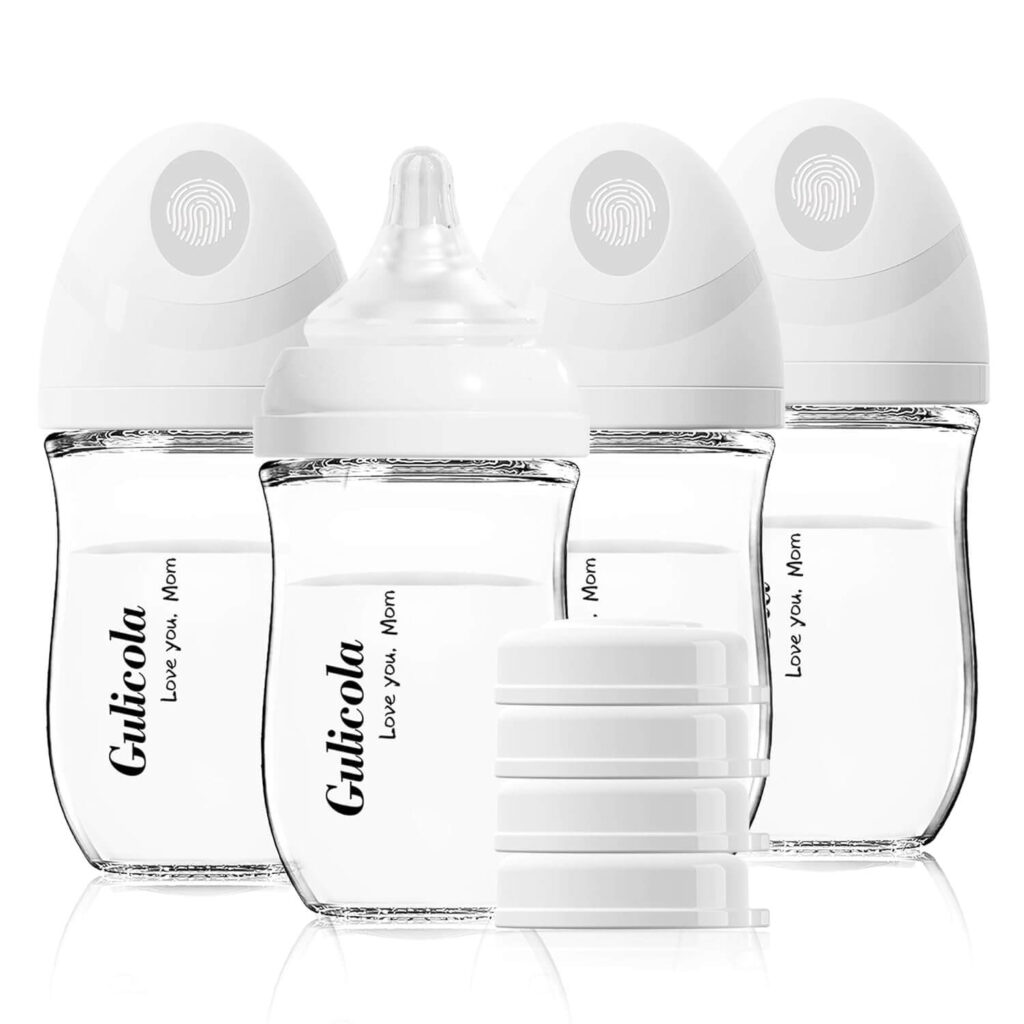
Gulicola’s glass range is organized around stage rather than style. The 3 oz bottle (about 80 ml) is genuinely small — appropriate for the first weeks, when feeds are tiny and a big bottle just makes measuring harder. The 5 oz (about 160 ml) covers the following months, and 7 oz, 8 oz, and 9 oz sizes carry through the rest of the first year.
Sets are sold in twos and fours, sometimes mixing 3 oz and 5 oz bottles in a single package with matching nipple stages, which is a sensible way to buy for a newborn since you’ll need both within a couple of months. Color options are limited to the collar and cap — white, pink, and black — the glass itself is clear.
The brand also sells wide-neck glass breast milk storage bottles, and replacement nipples individually, which matters because nipples are the wear item on any bottle system.
One buying caution worth stating plainly: Gulicola also sells a polypropylene version of the same bottle design, and the listings label it “PP (NOT Glass)” precisely because the two are easy to confuse at a glance. If glass is the reason you’re here, read the material line on the listing before you order, not after.
The Nipple System Is the Part That Matters
On any bottle, the nipple determines whether feeding goes well. The bottle is just a container.
Gulicola’s flow stages run SS (extra slow, newborn and preemie), S (slow, roughly one month and up), and M (medium, roughly three months and up). The nipple is wide-based, soft, and textured on the surface — the texture is meant to guide the baby toward a wide latch rather than clamping on the tip.
The stage numbers on the box are a starting suggestion, not a prescription. The right flow is the one your baby feeds calmly on: no gulping, no milk running from the corners of the mouth, no exhausted stopping halfway through. Babies vary enormously here, and a four-month-old perfectly happy on a slow nipple is not behind on anything.
An honest note on quality: a recurring theme in owner feedback is inconsistency between individual nipples — an occasional slow-flow nipple that runs much faster than it should. It’s not universal, but it comes up often enough to be worth knowing. The practical response is simple and applies to any brand: before the first use, fill the bottle with water, turn it over, and watch the drip rate. It should drip steadily, not stream. If one nipple behaves differently from its twin, set it aside. That thirty-second check will spare you a confusing feed with an upset baby.
Materials and What Independent Testing Showed
Because parents search for this specifically, it’s worth covering carefully.
An independent advocate who performs XRF testing on consumer goods tested a Gulicola glass bottle and published full readings. Lead came back non-detect on every component: the glass body, the area with the etched logo and volume markings, the plastic collar and cap, and the silicone nipple. That’s a good result, and the etched-rather-than-printed markings are part of why — painted graphics on glass drinkware are a common lead source, and there aren’t any here.
Trace cadmium was detected in the glass at a level the tester described as likely bound in the glass and non-leaching, and in the silicone nipple at a low single-to-low-double-digit level. On that second point she was explicit that trace cadmium is found in most modern silicone food-contact products rather than being specific to this brand, and that no study has established whether trace amounts in silicone cause harm through long-term use.
Three caveats belong with any result like this. XRF measures total elemental content in a material, not what leaches into milk — those are different questions. A single tested unit is not a guarantee about every production run. And this is independent advocacy testing, valuable but not a regulatory certification. Read it as a reassuring data point, not a seal of approval.
Cleaning, Sterilizing, and the Vent
Four parts: bottle, nipple, collar, cap. Take it fully apart every wash — the vent area on any anti-colic nipple traps residue if you rinse it assembled, and that’s also the part most likely to cause trouble if it’s not seated correctly on reassembly. Several owners have learned that the hard way, following an unexpected leak or an oddly behaving feed back to a misaligned vent.
Borosilicate glass handles boiling water, steam sterilizers, bottle warmers, and dishwasher sanitize cycles without degrading. That’s the core practical advantage over plastic, which clouds and weakens under exactly those conditions.
Two clarifications on the word “microwave,” since product listings use it loosely. A microwave steam sterilizer — the enclosed unit you add water to — is fine. Heating milk or formula in a microwave is not, in any bottle of any material. Microwaves heat unevenly and create hot spots that scald a baby’s mouth even when the bottle feels cool. Warm in a water bath or a bottle warmer, then test on your wrist.
Handling Glass Safely
None of this is specific to Gulicola, and all of it applies:
Sleeves aren’t included. If you want a silicone sleeve for grip and impact protection, check compatibility separately before you commit to a full set. Many parents consider one essential.
Respect thermal shock. Borosilicate tolerates temperature swings well, but not instant ones. Don’t pour boiling water into a cold bottle or run a hot bottle under cold water. Let temperatures move gradually.
Inspect before every use. Finger around the rim, bottle up to the light. A chip or hairline crack means it goes in the trash. This takes three seconds and it’s the most important habit with any glass bottle.
Plan for the throwing stage. Once a baby holds the bottle themselves and starts testing gravity from a high chair, many families keep glass for home and switch to something else for the car, the diaper bag, and daycare — a fair number of childcare centers don’t accept glass at all. Worth checking your center’s policy before you buy four of anything.
Who It Suits
A good fit if you’re feeding a newborn and want a truly small first bottle, you’re combining breast and bottle and want a wide soft nipple, you value simple assembly, and you want glass without a premium-brand price.
Look elsewhere if you need a bottle system with a large accessory ecosystem and guaranteed cross-compatibility, if you want a sleeve included in the box, or if you’re past the newborn stage and shopping mainly for a baby who’s already holding their own bottle.
At a Glance
| Material | Borosilicate glass body; silicone nipple; plastic collar and cap |
| Free of | BPA, BPS, phthalates |
| Neck | Wide neck |
| Assembly | Four parts |
| Sizes | 3 oz / 5 oz / 7 oz / 8 oz / 9 oz |
| Nipple flows | SS extra slow (0m+), S slow (1m+), M medium (3m+) |
| Venting | Anti-colic vent system in the nipple |
| Markings | Etched into the glass, not printed |
| Cleaning | Dishwasher, steam sterilizer, bottle warmer, boiling water |
| Sold as | 2-packs and 4-packs; mixed-size newborn sets; replacement nipples separately |
| Also available | Glass breast milk storage bottles; a separate polypropylene (non-glass) version |
| Not included | Silicone protective sleeve |
What kind of glass are Gulicola bottles made from?
Borosilicate glass, the same family used in laboratory glassware and heat-resistant kitchenware. It handles temperature changes considerably better than ordinary soda-lime glass, which is why boiling and steam sterilizing are fine. As glass, it contains no BPA, BPS, or phthalates and doesn’t shed particles when heated or scrubbed.
Have Gulicola bottles been tested for lead?
An independent consumer-safety advocate published full XRF results for a Gulicola glass bottle and reported lead as non-detect across the glass, the etched logo area, the plastic collar and cap, and the silicone nipple. Worth knowing: XRF measures total content in a material rather than what leaches into milk, and one tested unit isn’t a promise about every batch. It’s a reassuring data point, not a certification.
What about the cadmium mentioned in those test results?
Trace cadmium was found in the glass at a level the tester considered bound in the glass and non-leaching, and in the silicone nipple at a low level. She noted explicitly that trace cadmium turns up in most modern silicone food-contact products rather than being specific to this brand, and that no research has established whether those trace amounts cause harm. If it concerns you, natural rubber nipples are the cadmium-free alternative — check fit before assuming compatibility.
Which nipple flow should I start with?
For a newborn, start with the extra-slow SS nipple. Move up only when your baby shows they’re ready — feeding calmly but taking a long time and tiring toward the end. Signs the flow is too fast are gulping, coughing, milk escaping at the corners of the mouth, and pulling away. Age on the package is a suggestion; your baby’s feeding behavior is the actual guide.
Are the nipples interchangeable with other brands?
Some owners report that certain other wide-neck nipples fit these bottles. Cross-brand compatibility isn’t officially guaranteed by anyone, though, and a poor seal causes leaks and unpredictable flow. If you try it, test with water first and watch for drips around the collar.
I’ve read that some nipples flow too fast. Is that a real problem?
It’s a recurring theme in owner feedback rather than a universal defect. The fix is a habit worth adopting with any brand: before first use, fill with water, invert, and watch the drip rate. Steady drips are right; a stream is not. Compare nipples from the same pack against each other, and set aside any that behave differently.
How many bottles do I need to start?
Four to six covers a day of newborn feeds without constant washing. Because the 3 oz size is outgrown fairly quickly, a mixed set of 3 oz and 5 oz bottles is usually a better first purchase than four of either one.
Can I sterilize them in the microwave?
In a microwave steam sterilizer — the enclosed unit you add water to — yes. Heating milk or formula in a microwave is a different thing entirely and should never be done in any bottle. Microwaves create hot spots that can burn a baby’s mouth even when the bottle feels cool to you.
Do the bottles come with a silicone sleeve?
No. If you want one for grip and impact protection, source it separately and check the fit against the bottle’s diameter first. Plenty of parents treat a sleeve as essential with glass, so factor it into the cost.
Will these break if dropped?
Glass can break — that’s the honest trade-off for a material that leaches nothing and sheds nothing. Borosilicate is more resistant to thermal shock than ordinary glass but no more resistant to impact. A sleeve, gradual temperature changes, and a quick rim inspection before each use are what manage the risk.